Project

RFID Enhanced Gameplay

Gameplay Videos



Project Overview
For my final year project at uni I chose to look into the mechanic featured in games the Skylanders series and used in Amiibo + Disney Infinity. I researched the difference in player experience between players who used the physical scanning mechanic and those that used UI.
It achieves the scanning mechanic by using an Arduino to read NFC tags on the physical models.
I had a lot of fun working on this project and I'm really glad I chose the area of research that I did. I got to research some really interesting papers on different types and ways to use controllers.
As part of my research into this project and an overview of my development I wrote a dissertation which you can download here if you are interested.
Skills Used
- Unity
- C#
- Arduino wiring
- Serial communication in Unity
- Unity's UI Toolkit
- Presenting in person and online
- Academic Research
- Academic Writing
Early Arduino Demo Video
Physical Scanning Mechanic
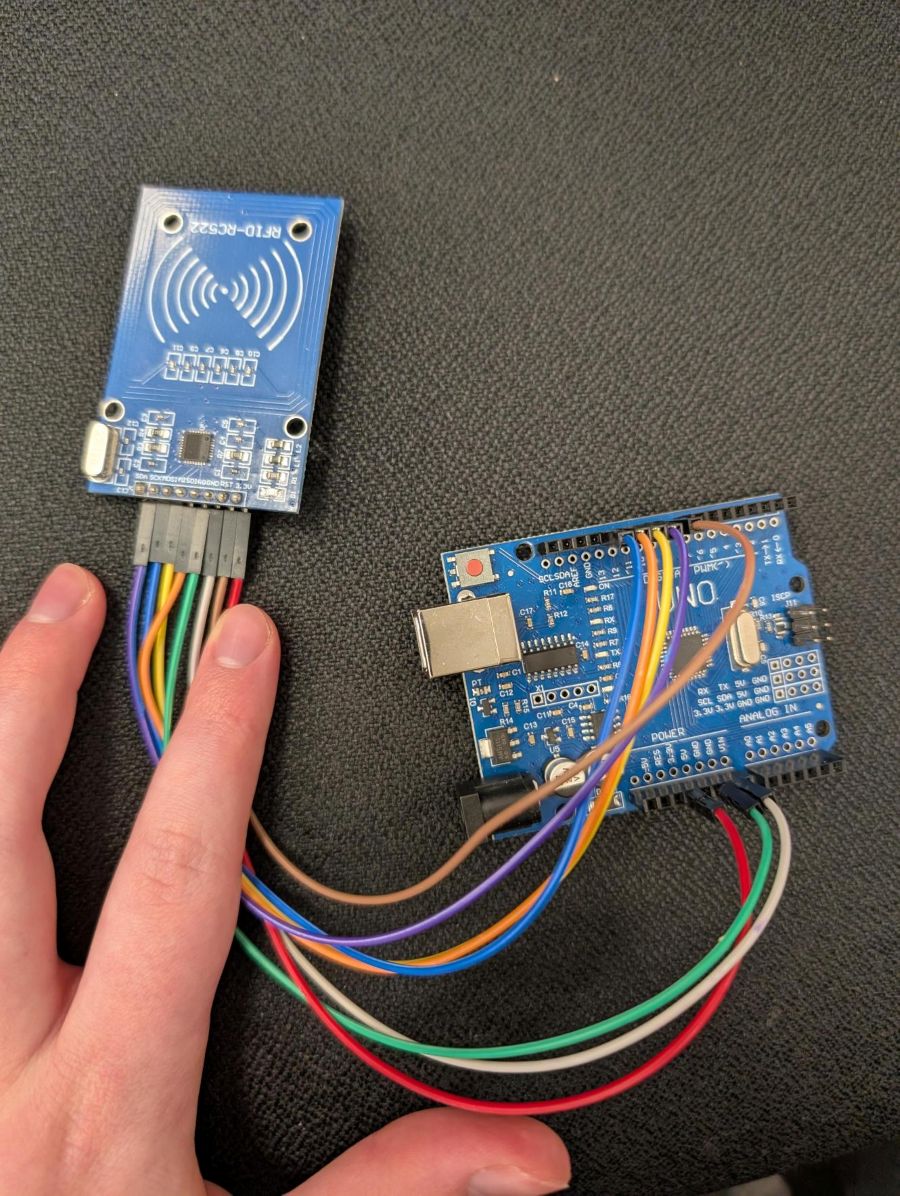
This is an early demo of the mechanic, by default the RC522 only sends messages when it reads an appropriate tag (the RC522 can not read ultra lightweight NFC tags such as the NFC stickers found online, this is because they do not have enough space to store unique IDs).
When a tag is read it sends the string to a serial port reader running in Unity which initialises the port on Start and processes the read data, if the string matches the ID expected for any of the three dragons it passes event with the dragons type to a separate script which is running on Unity's main thread where it invokes the event.
This is because Unity is single threaded and the Arduino reading script is running on a different thread and Unity prevents changes to be made from outside of its main thread.
NFC Tags
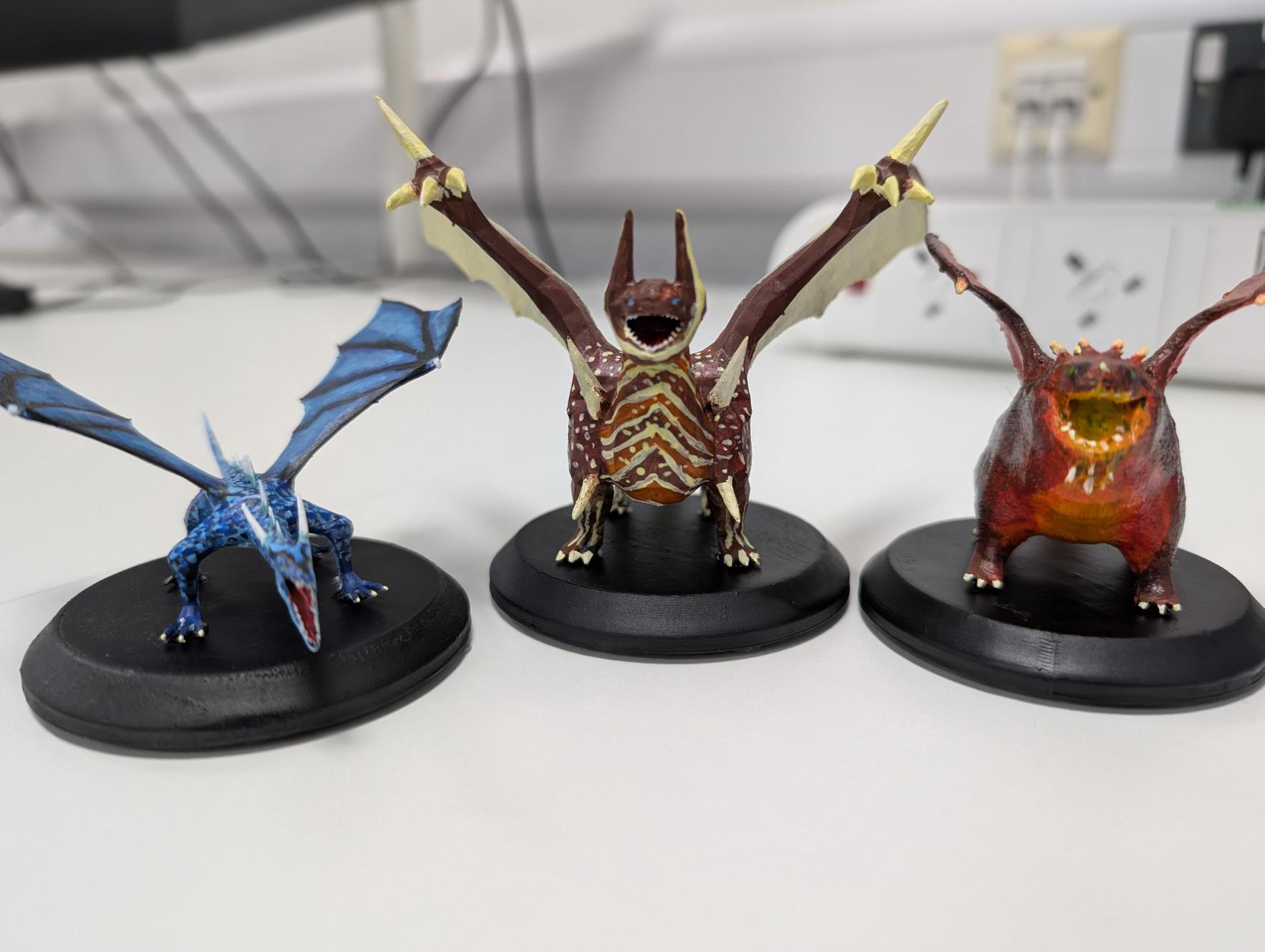
To implement the mechanic that allows the player to scan the physical models I used an Arduino with a RC522 component that would scan the NFC tags on the bottom of the character models and then pass the tag ID to Unity which would read it then swap to the correct character.
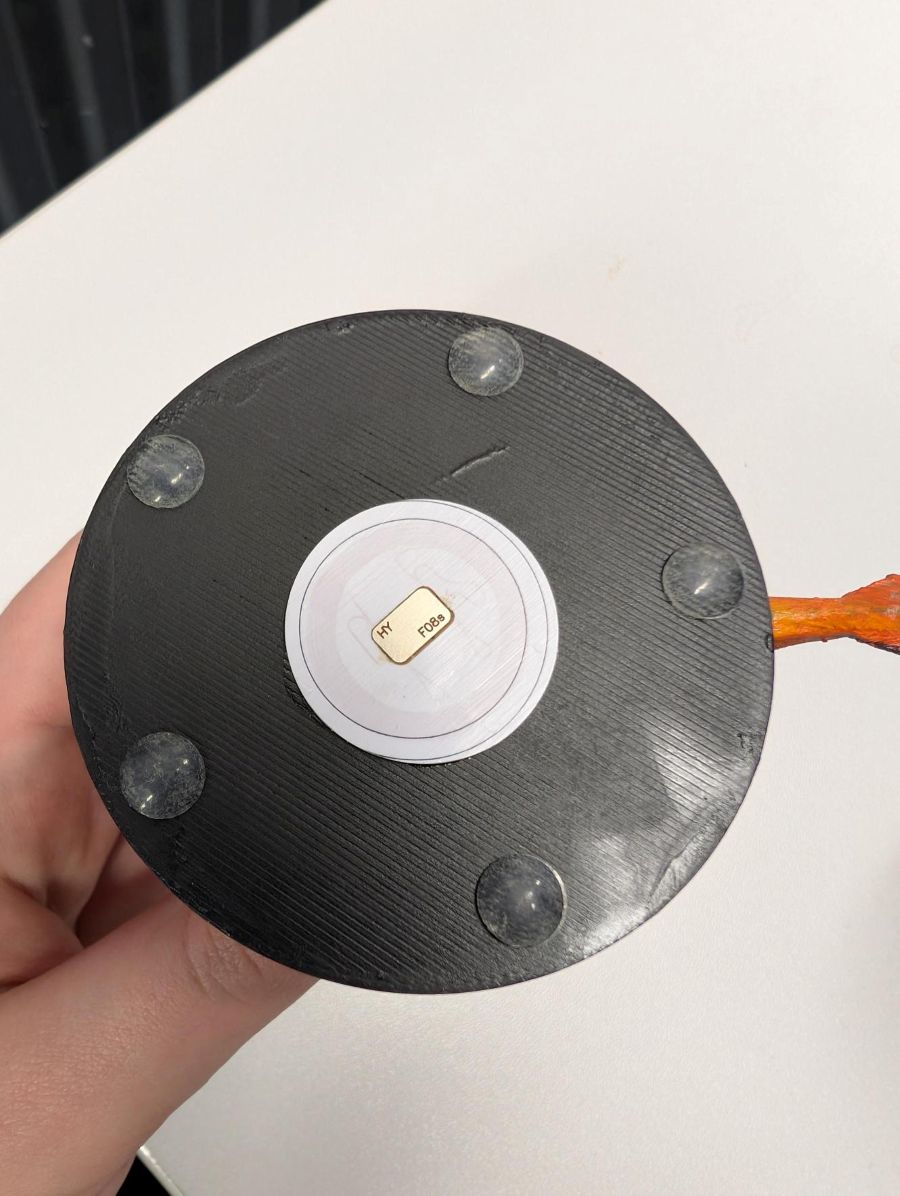
To get these tags I broke open NFC tags from online (see the blue tags in the video above) to get to the circuit inside then glued it to the bottom so it wouldn't be too bulky to use, to protect the circuit I added clear silicone bumpers so the models would still sit flat.
NFC Tags On Models
Academic Research
As this main area of this project was the dissertation written alongside the game demo I had to do extensive research into game design, game controllers, board games and player experience. This was to so that I could investigate the niche area that I focused on (researching if using physical models effects the player experience vs using in-game UI) with an understanding and deeper context to the areas it is related to.
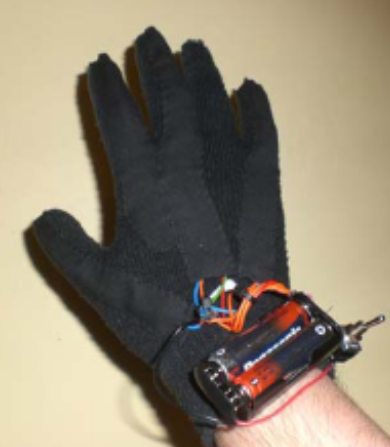
While academic research and writing is not my forte I was able to learn a lot of interesting details about accessibility and the uses for game controllers outside of gaming, the image on the left is a Wii remote fitted into a glove and was used for stroke rehabilitation.
I also researched into how novelty and familiarity can effect players, it showed that while novel mechanics or systems may attract many players upon release this is often not sustainable and players can seek out mechanics that they are already familiar with for comfort.
Playtesting and data gathering
To support my area of investigation I needed to do gather participants to play two versions of the same game to compare their experience through a questionnaire, I was able to gather 10 participants split evenly between the two versions.
I needed to isolate the effect that using physical models had on the player experience so I also created a version of the project where the player could switch character through in game UI.
While the focus was on player experience I also wanted my questionnaire to cover other areas that may give more context to the player experience such as how many times the player switch character (this was tracked and shown to them at the end of the demo) and asking if they had any previous experience with Skylanders/Amiibo/Disney Infinity etc to see if having a familiarity with the mechanic effected the results.
Most of the questionnaire broke down their experience into specific areas (ie Immersion, enjoyment, frustration or satisfaction) with the final question comparing their overall experience.
Arduino
Game UI
Physical Models
Overall Findings
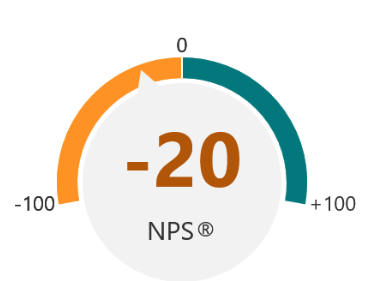
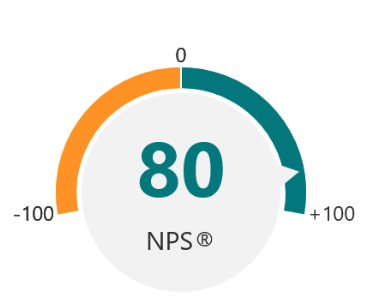
The images on the left are the overall player experience averages from both versions of the demo. While I did expect a difference I was surprised to see that the mechanic had such a large impact on the player experience, players also felt much more immersed and engaged with the physical demo.
Conclusion and future considerations
As with all projects I certainly learnt a lot, it was great to spend longer focussing on one project than working in a University environment usually allows me to, reading different research papers covering player experience and game controllers also gave me a lot of insight and appreciation into the area.
While creating a short puzzle game was an effective way of testing my original idea I do think that it doesn't utilise the mechanic to its full capacity, I would love to rework this project or create a new game in a different genre that can explore the mechanic more.
Dragon Models